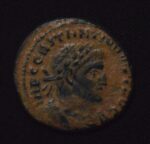
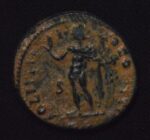
The Roman Bronze Constantine I AE-Follis coin is a notable example of imperial coinage from the reign of Emperor Constantine the Great, who ruled from 306 to 337 AD. This coin played a vital role in the economic life of the Roman Empire, serving as a standard medium of exchange for everyday transactions. Made from bronze, the AE-Follis was a lower-value coin that was widely circulated among the common populace, reflecting Constantine’s efforts to stabilize and reform the empire’s monetary system during a period of significant political and religious change. Its durability and broad distribution made it an essential part of daily commerce and a symbol of imperial authority.
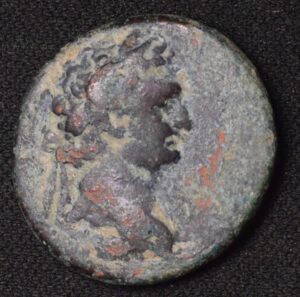
The obverse of the coin typically features a portrait of Constantine I, often depicted wearing a diadem or imperial crown, emphasizing his status as the emperor and ruler of the Roman world. The detailed engraving captures his facial features, beard, and regal attire, designed to project strength, stability, and divine favor. Surrounding his image are inscriptions identifying him with titles such as “IMP CONSTANTINVS MAX” (Imperator Constantine the Great), reinforcing his legitimacy and divine right to rule. The imagery served both as a political statement and a propagandistic tool, promoting his authority across the empire.
On the reverse side, the coin usually displays symbols associated with Constantine’s reign and religious transformation, such as the labarum (a Christian military standard), the Chi-Rho monogram, or other Christian symbols. These images reflect Constantine’s pivotal role in endorsing Christianity as the favored religion of the empire, a shift that profoundly impacted Roman religious and cultural life. The inscriptions often include titles or references to victory, divine favor, or the stability of the empire, further emphasizing Constantine’s role as a figure of divine legitimacy and protector of the Christian faith.
The bronze composition of the AE-Follis indicates its primary use in everyday economic activity, including local trade, wages, and small purchases. Made from a readily available and affordable metal, these coins helped facilitate commerce across the vast territories of the empire. Despite their modest material value, they carried significant symbolic weight, carrying the emperor’s image and messages of stability and religious unity. The widespread circulation of Constantine’s bronze coins reflects his broader efforts to unify and strengthen the empire through monetary reform and religious policies.
Today, the Constantine I AE-Follis bronze coin remains a valuable artifact for numismatists and historians. It provides insights into the economic strategies, religious shifts, and political propaganda of Constantine’s reign. Its imagery and inscriptions exemplify how coinage was used as a tool to promote imperial authority and religious transformation during a transformative period in Roman history. As a tangible piece of the past, this coin continues to reveal the complexities of Constantine’s rule and the enduring legacy of his reforms.