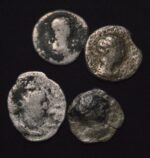
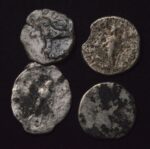
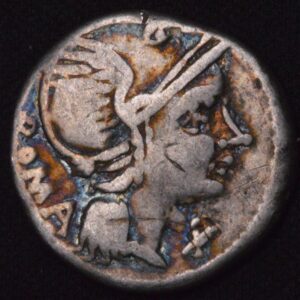
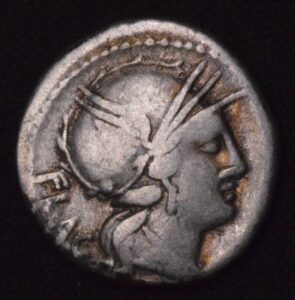
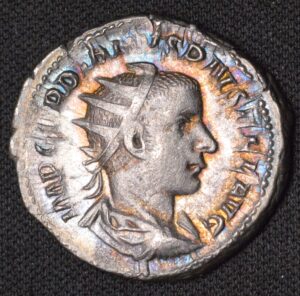
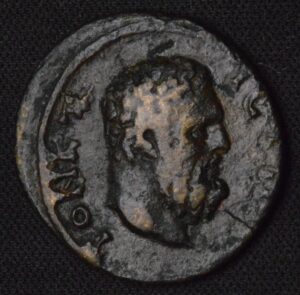
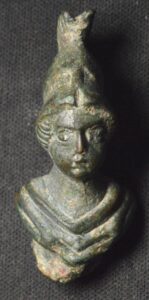
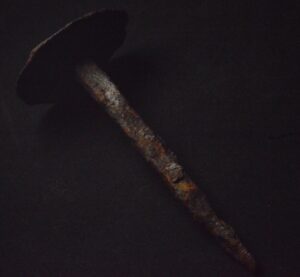
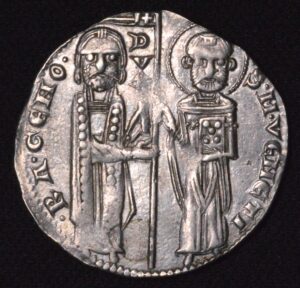
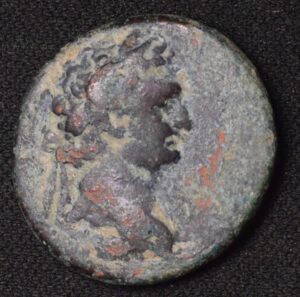
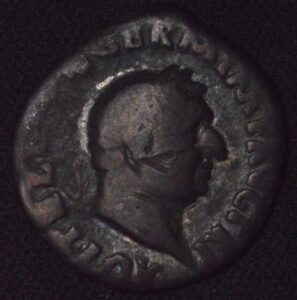
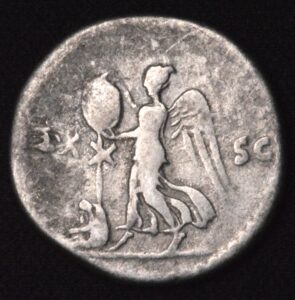
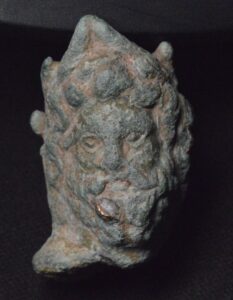
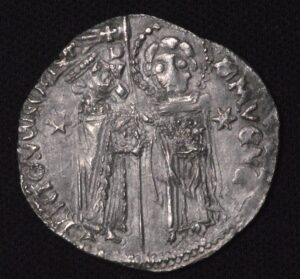
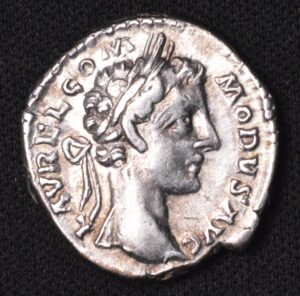
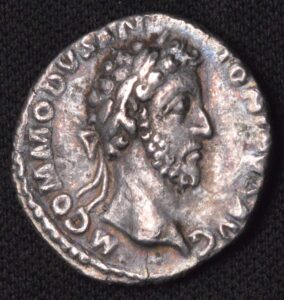
A set of four ancient Roman Silver Denarius coins in poor grade offers a fascinating glimpse into the everyday monetary life of the Roman Empire, despite their worn condition. These coins, once highly valued as standard currency, now show significant signs of wear, corrosion, and surface damage, reflecting extensive circulation over centuries. Despite their poor condition, each coin remains an important artifact that highlights the widespread use of silver currency in the Roman economy and provides valuable insights into the empire’s historical and artistic context.
On the obverse side of these denarii, the images of Roman emperors or significant figures are often faint or heavily worn, making identification challenging. The portraits, which originally displayed detailed facial features, laurel wreaths, or crowns, may now be barely visible, but some details can still be discerned with careful examination. The inscriptions surrounding the portraits, such as titles or honorifics, are often partially legible or obscured, yet they still serve as clues to the ruler or time period during which the coins were struck. These worn portraits remind us of the coin’s extensive circulation and the passage of time.
The reverse sides of these denarii typically feature images of Roman gods, symbols of victory, or military achievements, though in poor condition, these images may be greatly faded or damaged. Common motifs include eagles, laurels, or depictions of deities like Jupiter or Mars. The inscriptions on the reverse, often referencing emperor titles or achievements, may be difficult to read but still contribute to understanding the historical context of each coin. Despite their condition, these coins reveal the iconography and propaganda used to promote imperial legitimacy and stability.
Although these coins are in poor grade, their historical value remains significant. They exemplify the widespread circulation of silver denarii and the economic reach of the Roman monetary system. Such coins were used daily by ordinary citizens, soldiers, and merchants, making them essential artifacts for understanding Roman commerce and society. Their worn surfaces tell stories of heavy use, trade, and the passage of time, offering a tangible connection to the daily lives of people in ancient Rome.
In summary, these four ancient Roman Silver Denarius coins in poor condition still hold considerable historical importance. Despite their wear and damage, they embody the enduring legacy of Roman coinage, illustrating how currency circulated throughout the empire and contributed to its economy. These coins serve as valuable artifacts for collectors and historians, reminding us of the vast reach and enduring influence of Rome’s monetary and cultural legacy, even in their most worn state.