$360.00

1 in stock

Description

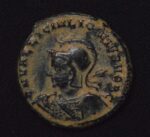
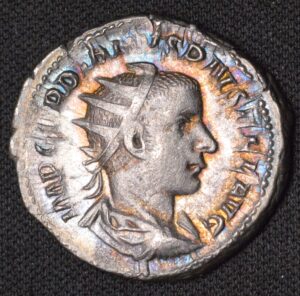
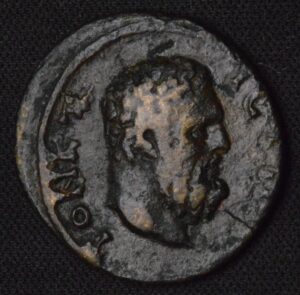
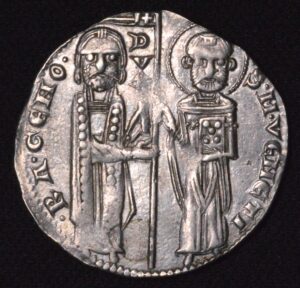
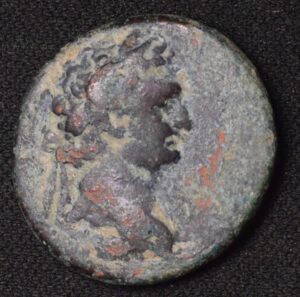
The Roman Licinius II Caesar AE coin is a notable piece from the late Roman Empire, issued during the reign of Licinius II, who was designated as Caesar under his father, Emperor Licinius I. These coins served both as currency and as a means of propagating imperial authority, loyalty, and political legitimacy across the empire. Made primarily from bronze, the AE coin was a common denomination used in everyday transactions, reflecting the widespread circulation of coinage during this period of Roman history.

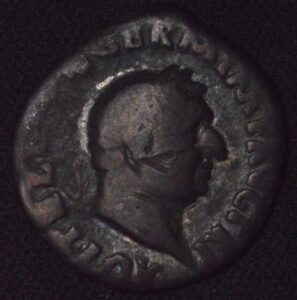
On the obverse, the coin typically features a portrait of Licinius II, often depicted as a youthful figure wearing a diadem or laurel wreath. The portrait is usually engraved with fine detail, emphasizing his imperial status, even at a young age. Surrounding the image are inscriptions that identify him by his titles, such as “CAESAR” or “NOB CAES,” reinforcing his position as heir and ruler-in-training. These images and inscriptions were strategically designed to promote loyalty to the imperial family and to legitimize his authority as Caesar.

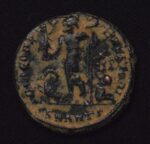
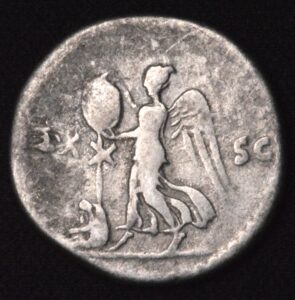
The reverse side of the coin often displays symbols of imperial power, such as military standards, shields, or depictions of divine figures associated with victory and protection. Common motifs include Victory holding a wreath or a globe, symbolizing success and dominance. Inscriptions on the reverse highlight titles, achievements, or references to the empire’s stability, further emphasizing Licinius II’s role within the imperial hierarchy. These images and texts served as propaganda tools to reinforce the legitimacy and stability of his position as Caesar.

The bronze composition indicates its role in daily commerce, being a practical and accessible means of transaction for common citizens. As a low-value coin, it was used for local trade, wages, and small purchases, making it essential for the economic functioning of the empire’s provinces. Despite its modest material, the coin carried the weight of imperial authority, with its imagery and inscriptions embodying the political messages of continuity and imperial unity during a turbulent period.

Today, the Licinius II Caesar AE coin is valued by collectors and historians for its historical significance. It provides insights into the political structure, propaganda, and economic conditions of the late Roman Empire. Even in worn or imperfect condition, these coins remain key artifacts that illustrate the importance of coinage in shaping imperial identity and asserting legitimacy within the complex political landscape of the time.
The Roman Licinius II Caesar AE coin is a notable piece from the late Roman Empire, issued during the reign of Licinius II, who was designated as Caesar under his father, Emperor Licinius I. These coins served both as currency and as a means of propagating imperial authority, loyalty, and political legitimacy across the empire. Made primarily from bronze, the AE coin was a common denomination used in everyday transactions, reflecting the widespread circulation of coinage during this period of Roman history. On the obverse, the coin typically features a portrait of Licinius II, often depicted as a youthful figure wearing a diadem or laurel wreath. The portrait is usually engraved with fine detail, emphasizing his imperial status, even at a young age. Surrounding the image are inscriptions that identify him by his titles, such as “CAESAR” or “NOB CAES,” reinforcing his position as heir and ruler-in-training. These images and inscriptions were strategically designed to promote loyalty to the imperial family and to legitimize his authority as Caesar. The reverse side of the coin often displays symbols of imperial power, such as military standards, shields, or depictions of divine figures associated with victory and protection. Common motifs include Victory holding a wreath or a globe, symbolizing success and dominance. Inscriptions on the reverse highlight titles, achievements, or references to the empire’s stability, further emphasizing Licinius II’s role within the imperial hierarchy. These images and texts served as propaganda tools to reinforce the legitimacy and stability of his position as Caesar. The bronze composition indicates its role in daily commerce, being a practical and accessible means of transaction for common citizens. As a low-value coin, it was used for local trade, wages, and small purchases, making it essential for the economic functioning of the empire’s provinces. Despite its modest material, the coin carried the weight of imperial authority, with its imagery and inscriptions embodying the political messages of continuity and imperial unity during a turbulent period. Today, the Licinius II Caesar AE coin is valued by collectors and historians for its historical significance. It provides insights into the political structure, propaganda, and economic conditions of the late Roman Empire. Even in worn or imperfect condition, these coins remain key artifacts that illustrate the importance of coinage in shaping imperial identity and asserting legitimacy within the complex political landscape of the time.

CUSTOMER FEEDBACK

Set your categories menu in Header builder -> Mobile -> Mobile menu element -> Show/Hide -> Choose menu
Create your first navigation menu here
Shopping cart
Start typing to see posts you are looking for.

OFFER A PRICE

Send Your Offer Below! Scroll photo!

Roman Licinius II Caesar AE Roman Coin