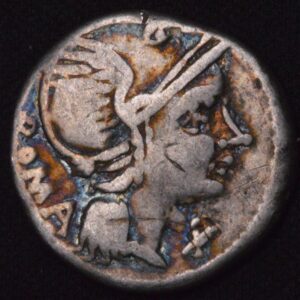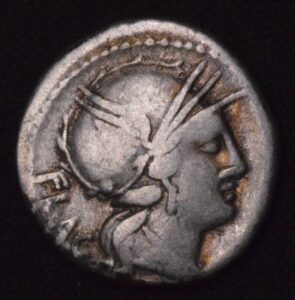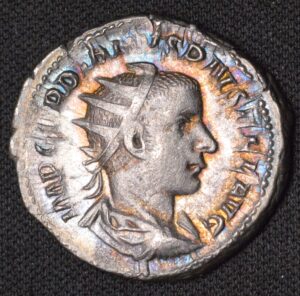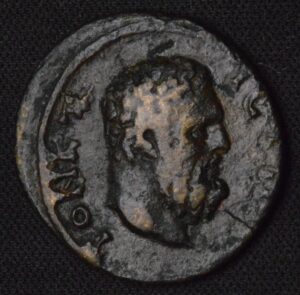
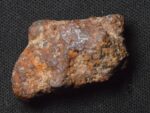
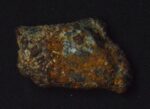
The AES Rude Old Proto Money from Ancient Italy represents some of the earliest forms of currency used by prehistoric and early historic societies in the region. As one of the first types of money, these rudimentary objects served as mediums of exchange before the development of standardized coinage, marking a significant milestone in the evolution of monetary systems. These primitive items are often characterized by their simple, unrefined appearance, reflecting their utilitarian purpose and the technological limitations of the time.
Typically made from natural materials such as lead, copper, or other available metals, these proto-money objects are often irregular in shape and size. They may appear as rough ingots, bars, or disks, sometimes with minimal or no inscriptions, emphasizing their functional rather than aesthetic qualities. Their crude, unpolished surface and basic form underscore their early role as barter substitutes—used in transactions within local communities for goods and services.
The significance of the AES Rude Old Proto Money lies in its status as a precursor to the more sophisticated coinage systems that would later develop in Italy and across the Mediterranean. These early forms of money facilitated trade and economic exchange in societies that lacked the technology or organization to produce stamped coins. They symbolize the beginning of monetary concepts, such as standard value, trust, and exchange, that would eventually evolve into the complex monetary economies of ancient civilizations.
Because of their age and rarity, these proto-money objects are highly valued by collectors and archaeologists. They provide invaluable insights into the social and economic practices of prehistoric and early historic peoples in Italy. Their rough appearance and primitive form serve as tangible links to humanity’s earliest efforts to establish standardized systems of trade and economic cooperation.
In summary, the AES Rude Old Proto Money from Ancient Italy is a fascinating artifact that marks the dawn of monetary history. Its primitive design and historical context illuminate the origins of money, reflecting the ingenuity and evolving sophistication of early societies in facilitating trade, establishing economic relationships, and laying the groundwork for the coinage systems that would dominate later civilizations.