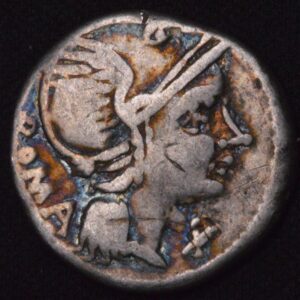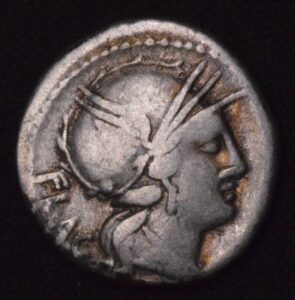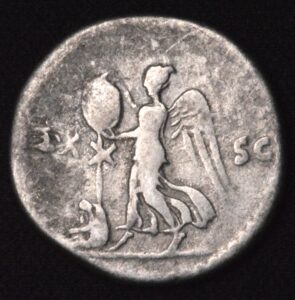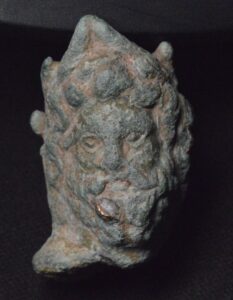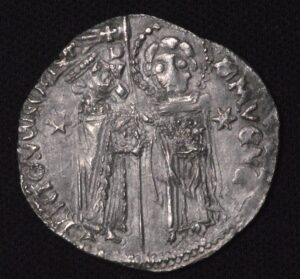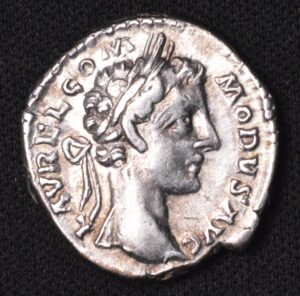
The Roman Republic Denarius of C. Postumius from 73 BC featuring a dog on the reverse is a distinctive and historically significant coin. This type of denarius highlights the artistry and symbolism of Roman Republican coinage, which often conveyed political messages, family heritage, or social virtues.
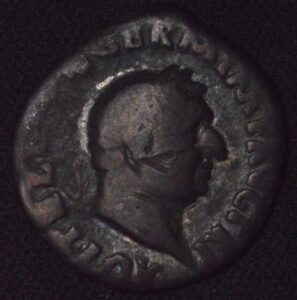
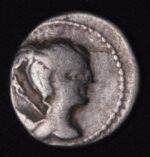
Obverse: The obverse typically displays the portrait of C. Postumius, a Roman magistrate or notable figure, rendered with classical realism. The portrait may include his name and titles inscribed in Latin, emphasizing his identity and civic stature. The craftsmanship reflects the style of the late Roman Republic, with detailed engraving and a focus on individual features.
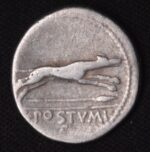
Reverse: The reverse of this denarius features a dog, a symbol rich in meaning. In Roman symbolism, dogs often represented loyalty, protection, and fidelity. The depiction might show a dog in a naturalistic pose, possibly accompanying a motif or inscription. This imagery could highlight virtues valued by Roman society or be associated with a particular family or political faction.
Material and Rarity: Struck in silver, the denarius was a standard and important denomination in Roman currency, used for military pay, political transactions, and civic exchanges. Coins with such distinctive reverse imagery are often sought after by collectors for their unique symbolism and historical context. Rarity depends on the specific minting and surviving specimens, but coins with animal motifs tend to be quite collectible.
Historical Context: Coins like this reflect the social and political climate of late Roman Republic, where imagery on coins served as propaganda and public messaging. The dog symbolizes loyalty, fidelity, and protection—values that Roman leaders may have wanted to project as virtues of their leadership.
Overall, the Roman Republic Denarius of C. Postumius with a dog reverse is a fascinating piece that combines artistic detail with symbolic meaning. It offers a tangible glimpse into Roman societal values and the political messaging conveyed through coinage during a dynamic period of Roman history.