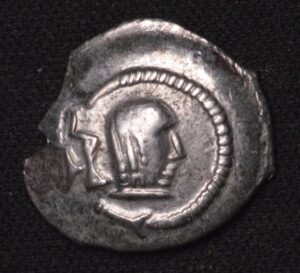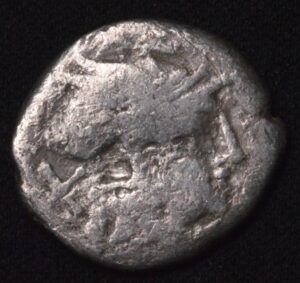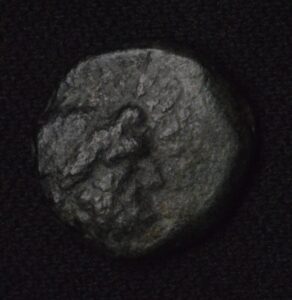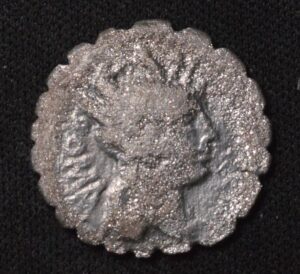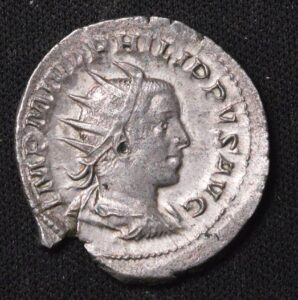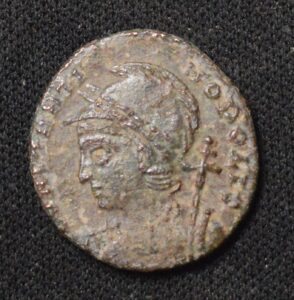
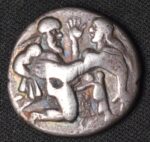
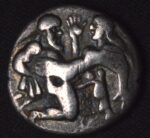
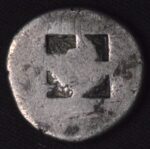
The Thrace, Thasos Stater from circa 480-463 B.C. is a stunning example of ancient Greek coinage, renowned for its artistic craftsmanship and historical significance. This large silver coin features intricate designs that highlight the cultural vibrancy of Thasos during the early classical period. Its beautiful toning enhances its visual appeal, adding depth and character to the coin’s surface, making it a prized artifact among collectors.
On the obverse, the coin depicts a large, detailed satyr, a mythological creature associated with Dionysus and known for its wild, mischievous nature. The satyr’s expressive face, with distinctive features such as pointed ears and a beard, is rendered with remarkable artistry, capturing the playful and primal spirit of Greek myth. The high relief and sharp details showcase the skill of the engraver and the artistic standards of Thasos during this era.
The reverse features a graceful nymph, often shown in a flowing pose that emphasizes movement and natural beauty. Surrounding her are decorative elements or inscriptions that identify the city and possibly the denomination. The image exudes elegance and vitality, reflecting the island’s appreciation for mythological themes and natural motifs. The combination of mythological figures and artistic finesse exemplifies the cultural richness of Thasos.
Made of high-quality silver, the coin’s vibrant toning and well-preserved condition highlight its age and rarity. The toning, resulting from centuries of oxidation, adds a desirable aesthetic layer, emphasizing the coin’s authenticity and historical depth. Its size and craftsmanship make it an impressive example of Greek minting, and its condition elevates its desirability among collectors of ancient Greek coinage.
Overall, this Thasos Stater with a large satyr and nymph is a beautiful and rare artifact that vividly captures the artistic and mythological spirit of ancient Thrace. It offers a tangible connection to Thasos’s history as a prosperous maritime and cultural center. Its striking appearance, historical context, and excellent condition make it a treasured addition to any collection of classical Greek coins.