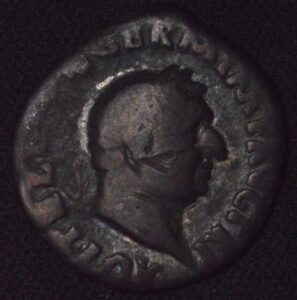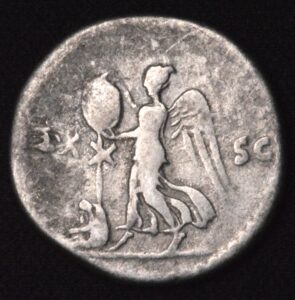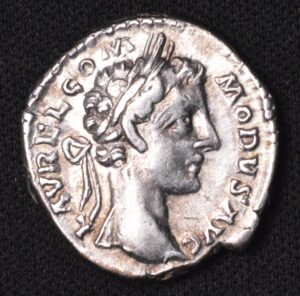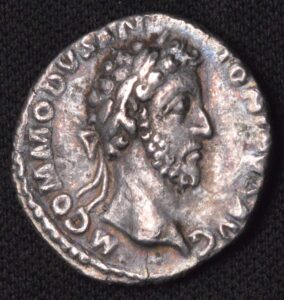
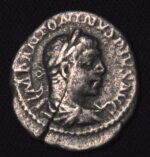
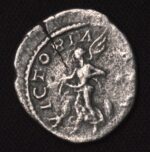
The silver denarius of Emperor Elagabalus, minted between 218 and 222 A.D., is a notable example of Roman imperial coinage from a tumultuous and intriguing reign. Elagabalus, also known as Varius Avitus Bassianus, was a young and controversial emperor whose short rule was marked by religious innovation and political upheaval. His denarius provides valuable insights into the coinage, iconography, and propaganda of early 3rd-century Rome.
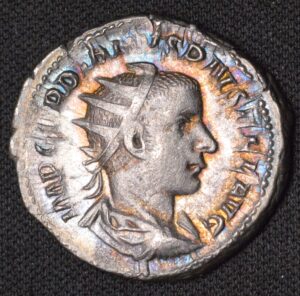
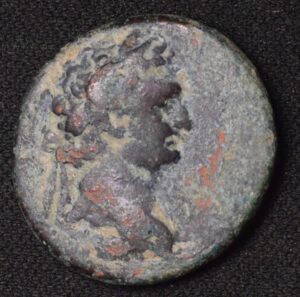
Typically, the obverse of this silver denarius features a portrait of Elagabalus, often depicted with youthful features and wearing a laurel or radiate crown, emphasizing his imperial authority. The inscriptions around his portrait would likely include his name and titles, emphasizing his legitimacy as emperor. The reverse often depicts religious symbols, such as the sun god Elagabal (after whom he was named), or other motifs associated with his religious reforms, which aimed to elevate the deity above traditional Roman gods.
The coin’s silver content and fine craftsmanship reflect its importance as a currency and propaganda tool. Despite his young age and controversial policies, coinage like this denarius was used to promote his image and divine favor among the populace. The iconography and inscriptions serve to reinforce his authority and connect him to divine powers, which was especially significant given his religious innovations.
Elagabalus’s reign was marked by attempts to elevate his god, Elagabal, and challenge traditional Roman religious practices, which is often reflected in his coinage through symbolic imagery. The coin’s condition and detail provide valuable insights into the artistic styles of the period, the religious themes promoted by the emperor, and the political messaging used to legitimize his rule.
In summary, this silver denarius of Emperor Elagabalus is a fascinating and historically significant piece that captures the unique and controversial aspects of his reign. Its imagery, inscriptions, and silver craftsmanship make it a prized item for collectors and scholars interested in Roman imperial coinage, religious history, and the political dynamics of early 3rd-century Rome.