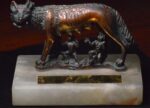
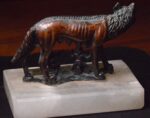
The Romulus and Remus she-wolf copper statue is a vintage sculpture crafted in Rome, Italy, embodying one of the most iconic symbols of ancient Roman mythology. This piece represents the legendary she-wolf nursing the twin founders of Rome, Romulus and Remus, capturing a moment deeply rooted in the mythological origins of the city. The statue’s copper construction gives it a distinctive metallic sheen and durability, reflecting traditional craftsmanship and artistic techniques used in Italy during the vintage period.
The sculpture features the she-wolf in a dynamic, protective stance, her body arched slightly as she nurtures the twin infants. The figures of Romulus and Remus are depicted as small, vulnerable children, emphasizing their dependence on the she-wolf for survival. The craftsmanship highlights detailed textures, from the fur of the she-wolf to the delicate features of the infants, showcasing the artist’s skill in rendering both animal and human forms in metal.
Made in Rome, the statue bears the cultural and historical significance of its origin, embodying the legendary foundation story of Rome as told by ancient Roman historians and mythologists. Its vintage status suggests it was produced in a period when classical themes were celebrated and reproduced in metal sculptures, perhaps during the Renaissance revival or later 19th-century artistic movements that cherished Roman heritage. The craftsmanship and material reflect a period when bronze and copper were popular mediums for commemorative and decorative artworks.
The patina and aging signs on the copper surface add character to the piece, hinting at its age and the historical context in which it was created. Over time, the copper may have developed a verdigris or aged patina, enhancing its antique appeal and emphasizing its vintage nature. Such details make the sculpture not only a representation of myth but also a collectible artifact with historical resonance.
Overall, this copper statue of Romulus and Remus with the she-wolf encapsulates a myth that is central to Roman identity, crafted with skill and imbued with cultural significance. Its vintage status and Italian origin make it a unique decorative and historical piece, celebrating the legendary origins of one of the world’s greatest ancient civilizations.